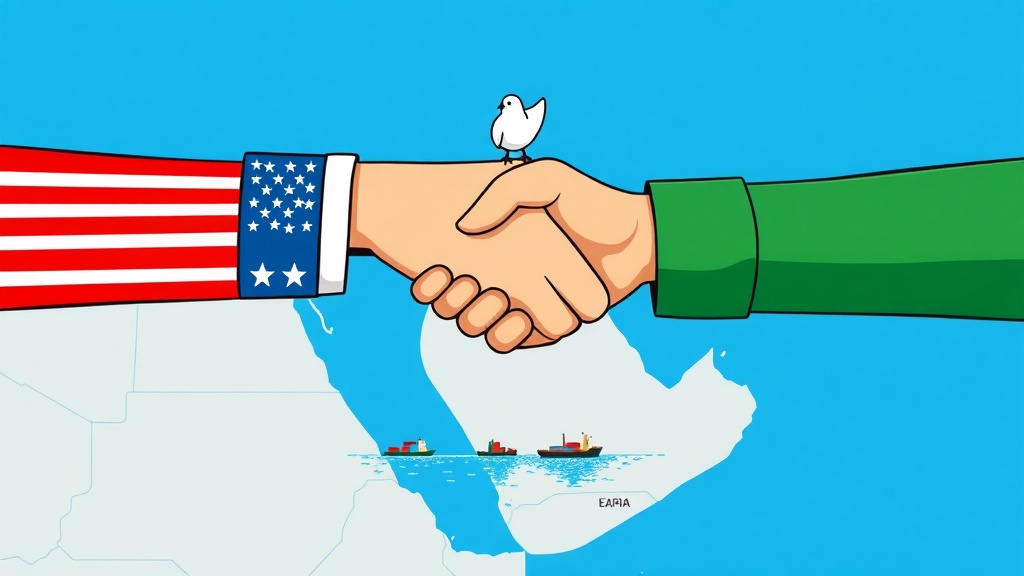
A Handshake Across the Gulf
President Donald Trump and Iranian President Masoud Pezeshkian have signed what officials are describing as a memo of understanding — an initial agreement aimed at ending the recent military confrontation between the United States and Iran, extending a ceasefire and reopening the strategically vital Strait of Hormuz to shipping. The signing triggered an immediate drop in oil prices, according to the New York Times, as markets responded to hopes of eased tensions in the region.
What the Deal Contains
According to NBC News and CBS News, the agreement sets out a framework for de-escalation and commits both sides to further negotiations, though the full terms have not been made public. Al Jazeera reported that world leaders broadly welcomed the deal, particularly its provisions for reopening the Strait of Hormuz, a chokepoint through which a significant share of global oil flows.
Defence Secretary Pete Hegseth issued a stark warning alongside the diplomatic breakthrough, telling reporters that the United States would restart military action if Iran failed to uphold the agreement, according to the Guardian. The comment underscored the fragile nature of what has been agreed so far.
How It Compares to the Obama-Era Deal
CBS News noted that analysts have been drawing comparisons between this preliminary memo and the 2015 Joint Comprehensive Plan of Action — the nuclear deal struck under President Obama. Key differences remain unclear given the limited details released, but observers point out that the new document is described as a memo of understanding rather than a comprehensive treaty, suggesting it carries less binding weight at this stage.
A Deal or a Dud?
Not everyone is convinced the agreement represents a genuine diplomatic achievement. CNN characterised Trump's deal as potentially "a dud," arguing that the President is nevertheless extracting political benefit from the optics of direct engagement with Tehran. CNBC reported that Trump hit back at his critics, defending the agreement as a historic step while the debate over potential US concessions continued to intensify.
- Oil prices fell on news of the deal, offering relief to global shipping markets.
- The Strait of Hormuz is set to reopen under the agreement's terms.
- Secretary Hegseth warned military action could resume if Iran reneges.
- Full treaty details have not yet been disclosed publicly.
What Comes Next
Both governments have indicated that further talks will follow to flesh out the technical and nuclear dimensions of any lasting settlement. The sources are thin on specific timelines or verification mechanisms, and it remains unclear what, if anything, Iran has agreed to concede on its nuclear programme — a central concern that drove years of international diplomacy before this preliminary accord. The coming weeks of negotiation are likely to determine whether this memo of understanding becomes a lasting agreement or another false dawn in decades of fraught US-Iran relations.